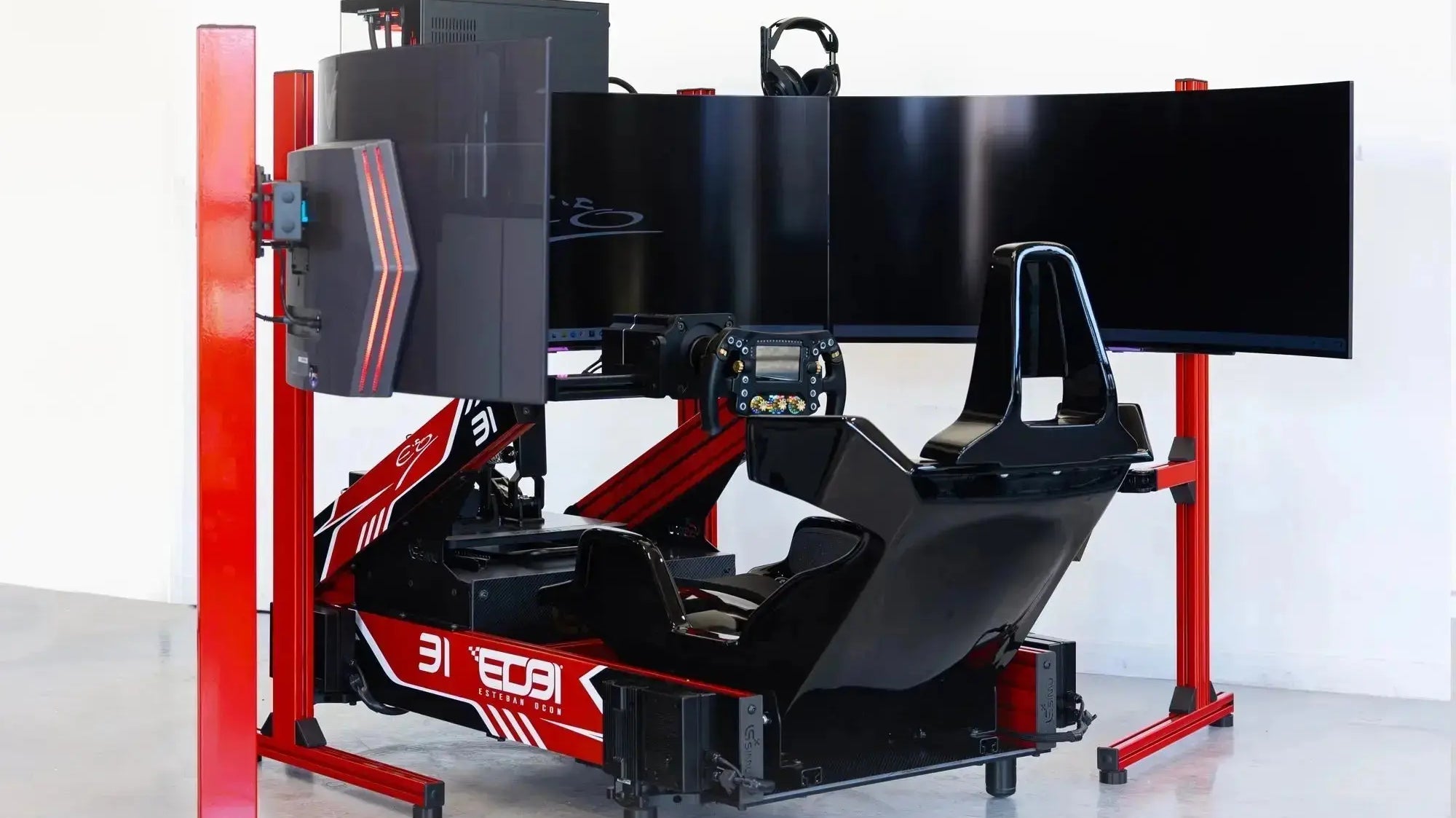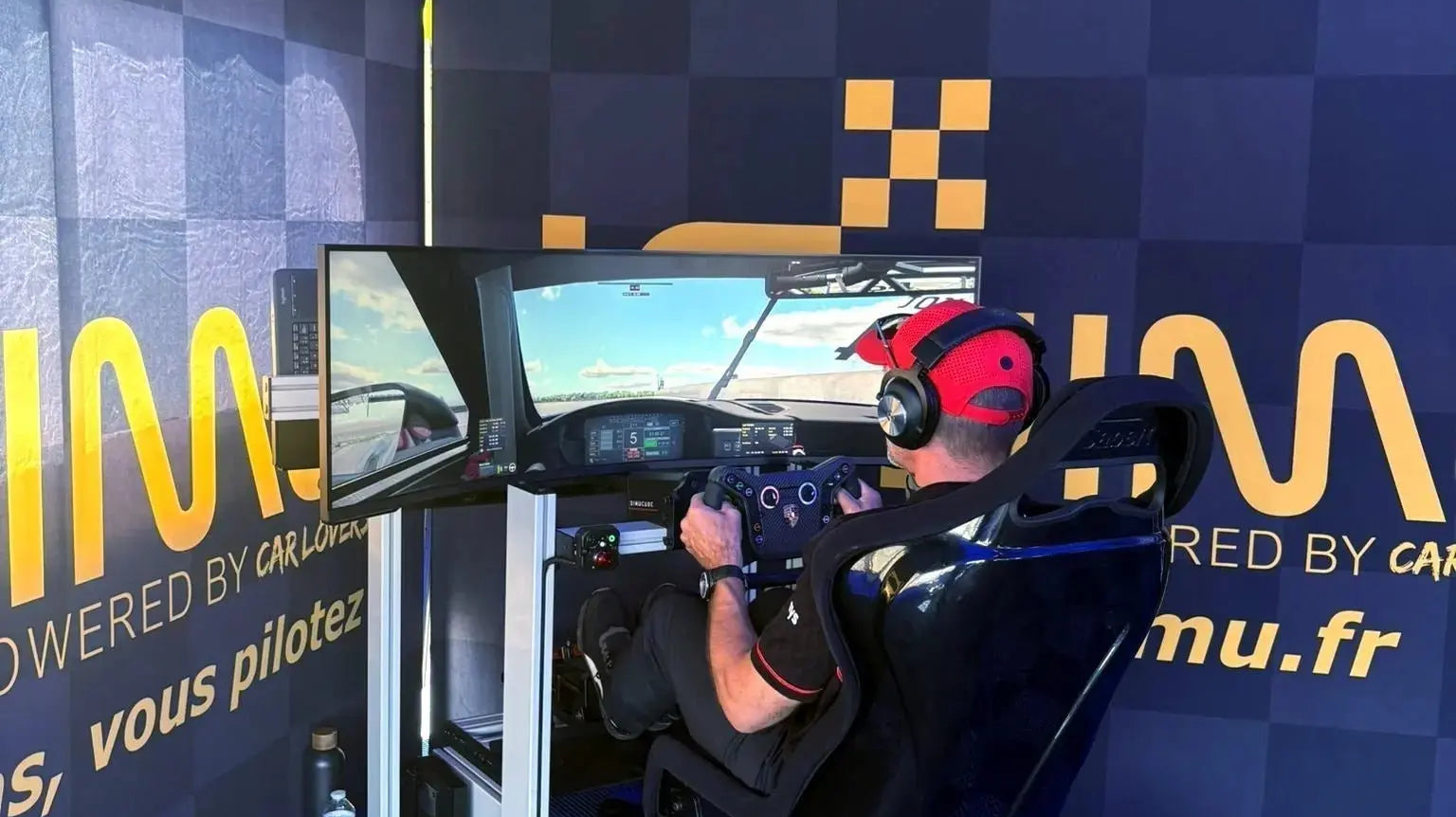

The world of sim racing is experiencing tremendous growth, and static simulators are attracting more and more passionate enthusiasts. These setups make it possible to experience the full intensity of racing while staying comfortably at home or in a dedicated sim racing space. Whether the goal is pure performance or simply the pleasure of virtual driving, the choice of cockpit and accessories directly impacts the overall quality of the experience. Discover what makes static simulators unique, their advantages compared to motion simulators, and how to equip yourself to fully enjoy every sensation.
What Is a Static Simulator?
A static simulator is a driving platform designed to reproduce the driving position and cockpit layout of a real car without incorporating mechanical movement systems. To learn more about static simulators, it’s important to understand that they do not use actuators or motorized systems to generate acceleration forces or lateral movement effects.
This type of setup focuses on driving position accuracy, control layout, and visual realism through screens or virtual reality headsets. The experience is centered around visual and audio immersion, making it ideal both for users looking for accessible simulation and for purists focused on the technical side of driving.
Differences Between Static and Motion Simulators
Many people still confuse static simulators with motion simulators. However, each serves different purposes and offers unique advantages depending on the expectations of the driver, whether for casual enjoyment or intense competitive sim racing.
Several factors distinguish these two worlds, from the embedded technologies to the type of sensations delivered and the flexibility of home installation.
Embedded Technologies and Physical Feedback
On a static simulator, the absence of moving mechanisms means the chassis remains completely stable during gameplay. Sensations mainly come from steering wheel force feedback, seat or pedal vibrations, and sound quality. This allows drivers to feel the road with precision depending largely on the quality of the chosen accessories.
In comparison, a motion simulator generally integrates motors, actuators, or motion systems capable of moving the chassis to simulate weight transfer, acceleration, braking, and cornering forces. This approach maximizes physical immersion but requires much more space and a significantly larger financial investment.
Simplicity and Accessibility
Choosing a static simulator is generally more affordable and far easier to install. There is no need for complex setup procedures or advanced technical calibration. In addition, these systems integrate easily into many different spaces, making them particularly attractive for users with limited room at home.
Motion simulators, on the other hand, require consideration of many factors such as total weight, floor mounting, electrical power requirements, and advanced software compatibility. They are mainly targeted toward professional training or users seeking an extreme simulation experience.
Components and Modularity of a Static Simulator
Every static simulator includes essential components that can be customized according to preferences and budget. At the center of the setup is the cockpit, designed to reproduce a real driving position. Some models focus specifically on recreating GT (Grand Touring) or Formula One seating positions, while others prioritize versatility.
Around this base, various accessories can be added: force feedback steering wheels, adjustable pedal sets, and triple-screen setups to maximize immersion. Most components can be adapted to suit different preferences, whether the goal is to recreate the atmosphere of single-seater racing or a specific motorsport championship.
Choosing the Right Chassis and Ergonomics
The chassis determines not only the overall rigidity of the setup but also its stability during intense sim racing sessions. Its design must support the power of high-end peripherals while eliminating unwanted flex. Good ergonomics also make it easier to switch between different driving styles, such as moving from a GT position to a Formula-inspired layout.
Some manufacturers even offer evolutive chassis designed to support future generations of accessories and electronic hardware. This avoids the need to completely replace the setup when upgrading equipment later on.
Essential Accessories
Adding the right accessories dramatically transforms the experience offered by a static simulator. A precise pedal set delivers nuanced braking control, while the choice of steering wheel heavily influences driving sensations and responsiveness. Integrating a sequential or H-pattern shifter further increases realism.
Additional options also include supports for large displays or dedicated mounts for virtual reality. Some drivers even choose real motorsport bucket seats to improve immersion and increase comfort during long driving sessions.
The Advantages of Static Simulators
In the world of sim racing, choosing a static simulator offers many advantages, whether for beginners or experienced virtual racers aiming for podium finishes. Durability, modularity, and low maintenance are among the key benefits frequently highlighted by users.
Beyond their ease of use, these systems remain highly scalable and compatible with a wide variety of software and hardware platforms. Static simulators therefore combine technical performance with adaptability for many different home environments.
Optimized for Different Driving Styles
Fans of GT racing often prefer cockpits designed around a semi-reclined seating position offering excellent panoramic visibility. Others are drawn to single-seater configurations inspired by Formula One, featuring a low seating position and minimalist cockpit design.
Thanks to the modularity of the equipment, it becomes easy to switch from one racing style to another without rebuilding the entire structure. This flexibility appeals equally to passionate enthusiasts and families sharing the same setup.
Maintenance and Cost Efficiency
A static simulator reduces maintenance costs because it uses no motors or actuators to generate movement. A few simple maintenance routines, such as cleaning the chassis and checking accessory mounting points, are enough to ensure long-term reliability.
This financial advantage opens the door to younger drivers and new sim racing enthusiasts who want to progressively upgrade their equipment over time. The ability to evolve the setup at a lower cost is also highly appreciated by experienced users.
How to Choose the Right Static Simulator?
The right choice usually depends on available space, desired sensations, and the types of vehicles you want to simulate. Paying attention to cockpit ergonomics and the availability of compatible accessories will greatly impact long-term enjoyment.
Some users prioritize strong immersion to recreate legendary racing circuits, while others focus on training to improve their driving technique. In all cases, carefully evaluating the rigidity of the chassis and the quality of the electronic components helps guarantee a long-lasting and enjoyable experience.
Turnkey Simulator or Custom Build?
Many users hesitate between purchasing a fully assembled package or building a custom static simulator step by step. Turnkey solutions are attractive because of their simplicity and guaranteed compatibility between all components. They are ideal for users wanting to start quickly.
Building a setup piece by piece offers maximum flexibility. Selecting each component individually — from the chassis to the seat and accessories — allows for a highly personalized driving experience. Online communities and forums regularly share advice and inspiration for successful custom builds.
Installing a Simulator at Home
Proper installation of the cockpit strongly contributes to comfort and long-term enjoyment. Choosing a room with enough space around the chassis prevents the setup from feeling cramped during sessions. Limiting direct natural light also improves screen visibility and concentration.
It is also important to properly organize accessories. Creating a dedicated sim racing space makes it easier to switch into driving mode and helps preserve equipment in excellent condition while encouraging more frequent use.
The Future of Static Simulators in Sim Racing
The popularity of static simulators continues to grow thanks to advances in immersive technologies and the increasing accessibility of sim racing. The combination of ergonomic innovations, diversified models, and new accessories is expanding the market to reach a wider audience than ever before.
International competitions continue to promote excellence in virtual driving by relying on reliable, high-performance simulators adapted to every category of racing car, from GT cars to the most sophisticated single-seaters. The French sim racing industry plays a major role in this evolution, driven by local expertise and a strong culture of quality.