
The world of sim racing is evolving at incredible speed thanks to increasingly advanced motion technologies. Today, a driving simulator manufacturer can deliver exceptional levels of immersion. At the center of this evolution, the motion simulator plays a key role. Discover how these dynamic systems are revolutionizing sim racing, attracting both enthusiasts and professional drivers, and what technologies make it possible to experience truly realistic sensations.
What is a motion simulator?
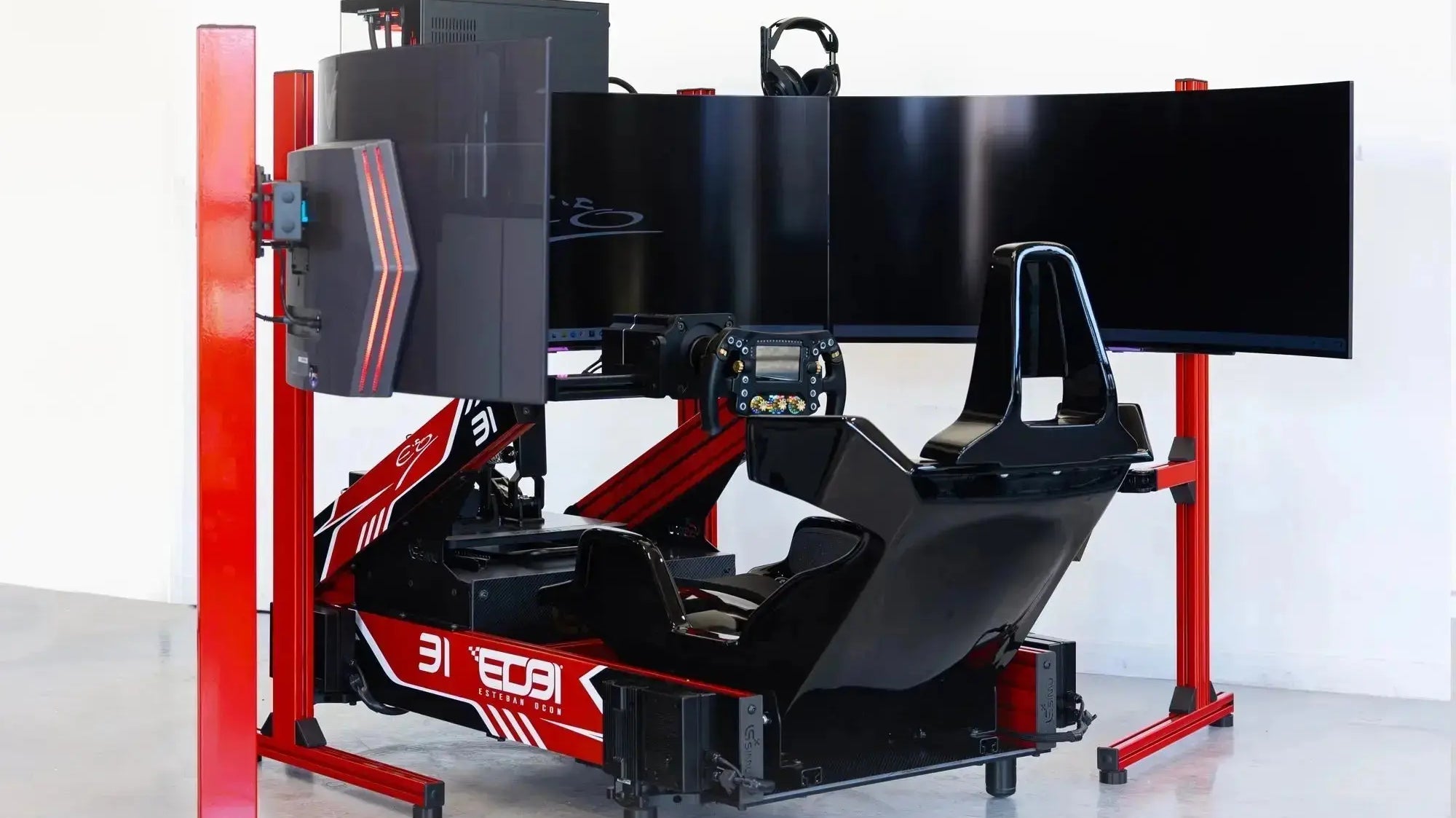
A motion simulator is a system designed to accurately reproduce the movements experienced inside different types of vehicles. Using a motion platform equipped with electric or hydraulic actuators, it delivers realistic sensations close to those felt in real motorsport conditions.
Far more than a simple trend, this type of motion simulator perfectly fits the world of sim racing, where the search for deeper immersion has become essential. Every acceleration, braking phase, and corner is physically felt by the driver, making the experience far more intense. Beyond entertainment, this technology also helps improve driving technique and reflexes, much like training on a real circuit.
Main Components of a Motion System
The performance of a motion simulator relies on several essential components. Each element contributes to creating an environment that faithfully reproduces real driving conditions. Sim racing enthusiasts understand how critical the perfect balance between hardware and software is to achieving maximum immersion.
Motion Platforms and Movement Technologies
The motion platform is the core of every motion simulator. It receives data from the simulation software and activates the actuators according to highly precise movements. Some systems use electric actuators, appreciated for their accuracy and quiet operation, while others rely on hydraulic actuators capable of delivering faster and more powerful motion.
The choice between these different motion technologies depends on expectations and budget. Whatever the solution, it is the perfect synchronization between physical movement and haptic feedback that guarantees the quality of the final immersive experience.
Actuators and Motors: Power and Responsiveness
Actuators are at the heart of every successful dynamic simulator setup. Their speed and ability to reproduce the smallest variations make all the difference. Accurately simulating everything from road texture to the impact of losing control requires highly responsive and adjustable hardware.
Some advanced simulators also integrate additional dedicated motors to enhance the experience further. This combination improves the simulation of vehicle weight transfer, body roll, and cornering forces. As a result, every session on a racing simulator becomes even more authentic and emotionally engaging.
Why Choose a Motion Simulator for Sim Racing?
Choosing a motion simulator means looking for authentic sensations that closely replicate real track driving. Whether for professional drivers chasing performance or enthusiasts seeking adrenaline, access to these motion technologies opens entirely new possibilities in sim racing.
Total Immersion and Sensory Experience
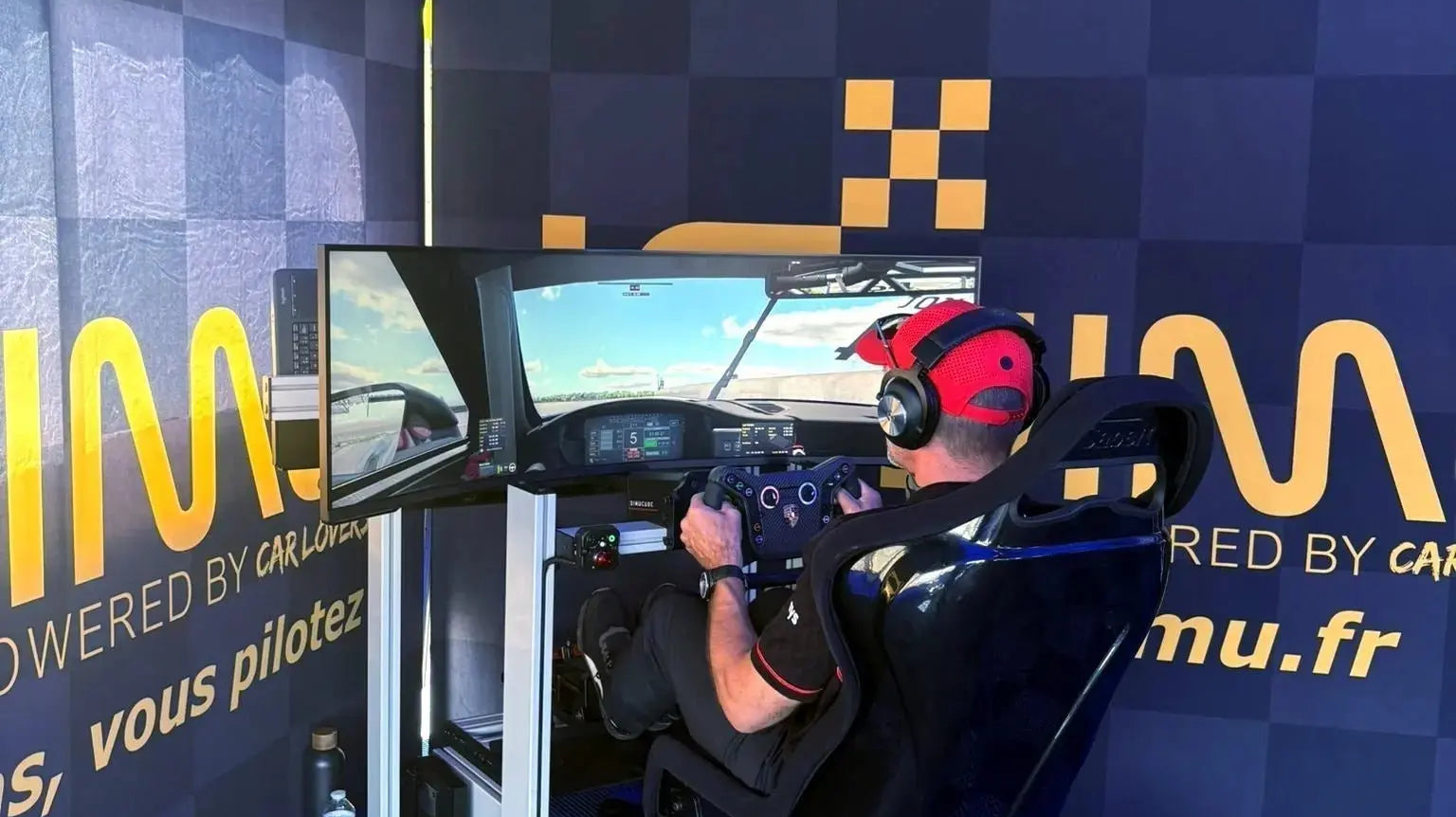
The main advantage is undoubtedly the level of realism. From the very first moments, the motion platform reproduces every vibration, bump, and loss of grip with impressive accuracy. A properly configured motion simulator fully immerses the driver in a living and interactive environment.
Mental engagement increases significantly because every maneuver requires anticipation and concentration. The brain naturally interprets the signals transmitted by the machine, creating a true sense of complete immersion. This realism has convinced many professional drivers and competitors, who now use the motion simulator as a key training tool.
Learning, Progression, and Safety
Training on a simulator offers an unmatched level of safety. Drivers can push their limits, refine their technique, and repeat complex situations without physical risk. Whether practicing wet-weather driving or perfecting race starts, the ability to customize training scenarios enables rapid progression.
Mistakes become opportunities for improvement rather than costly consequences. Drivers can repeat difficult corners or braking zones as many times as necessary. Through repetition, confidence increases and the margin for error decreases — both in official competitions and on real racetracks.
Motion Simulators: Applications and Usage Environments
The use of a racing simulator is no longer limited to professional training centers or motorsport teams. Thanks to advances in motion technologies, installing a high-performance dynamic system at home has become increasingly accessible.
Home Use and Pro-Am Drivers
For passionate sim racers, a motion simulator quickly becomes an essential part of the setup. It satisfies both the desire for serious performance improvement and the search for intense driving sensations after work. Manufacturers now compete to develop compact, modular solutions adapted to home environments.
This democratization is attracting a whole new generation of users. From multiplayer sessions at home to setups equipped with ultra-realistic peripherals, the possibilities offered by a modern home motion simulator continue to expand.
Professional Training and Technical Development
In the professional world, motorsport teams, driving schools, and training centers are investing heavily in these tools. Training on a motion simulator allows drivers to work on mental preparation, racing lines, and learning new circuits in complete safety.
Beyond the savings generated by reducing travel and track rental costs, the educational benefits are undeniable. The simulator provides objective performance analysis and helps drivers adapt to varying weather conditions or unexpected technical situations.
Recent Innovations in Motion Simulators
The race for innovation in the racing simulator industry continues to push the limits of realism and accessibility every year. Between software sophistication, mechanical optimization, and new interfaces, users benefit from increasingly immersive experiences.
New Materials and Modular Design
Recent innovations combine lightweight materials with exceptional rigidity for the construction of platforms, cockpits, and support structures. These advancements improve both mobility and modularity for the motion simulator. Adapting or dismantling a setup has become easier, meeting the demands of evolving home environments.
The modular design approach also enables extensive customization: additional screens, dedicated cockpits, professional pedal sets, and more. These options significantly enhance immersion, whether for casual users or passionate sim racers looking to upgrade their setup over time.
Advanced Software and Artificial Intelligence
The integration of intelligent software is radically transforming the experience. Some motion simulators now include algorithms capable of adjusting actuator and motor responses according to each driver’s profile. This personalized approach maximizes the driver’s connection to the simulated environment.
These software innovations are regularly updated with new settings and racing scenarios, continuously maintaining the motivation and curiosity of the most demanding sim racing enthusiasts.
How to Choose the Right Motion Simulator?
With such a wide range of options available, choosing the ideal motion simulator requires careful consideration of several factors. Whether beginner or experienced, some aspects should always be evaluated before investing in a racing simulator.
Realistic Sensations and Software Compatibility
It is important to define the level of realistic sensations you are looking for. Some users prioritize accurate road feedback, while others seek versatility for racing, rally, or flight simulation. Ensuring software compatibility guarantees a smooth and enjoyable daily experience.
The ability to adjust actuator sensitivity, transition speed, and overall motion platform behavior also greatly impacts comfort and realism. Choosing a trusted manufacturer often provides the added benefit of personalized support and expert guidance.
Ergonomics, Space Requirements, and Scalability
Available space and the scalability of the installation are essential factors. Choosing a modular motion simulator makes it possible to expand and upgrade the setup over time as technologies evolve.
Seat ergonomics, control accessibility, and maintenance simplicity also play a key role. It is important to consider structural rigidity, operating noise levels, and the technical support provided by the manufacturer or user community.
The Future of Motion Simulators in Sim Racing
Current trends point toward an even greater integration of dynamic systems into everyday sim racing experiences. With continuous improvements in motion platforms, actuators, and connected interfaces, immersion is reaching unprecedented levels.
The upcoming arrival of hybrid solutions combining augmented reality with mechanical feedback will further expand the possibilities. Between technological innovation and increasing accessibility, the motion simulator is becoming an essential tool for all virtual driving enthusiasts.